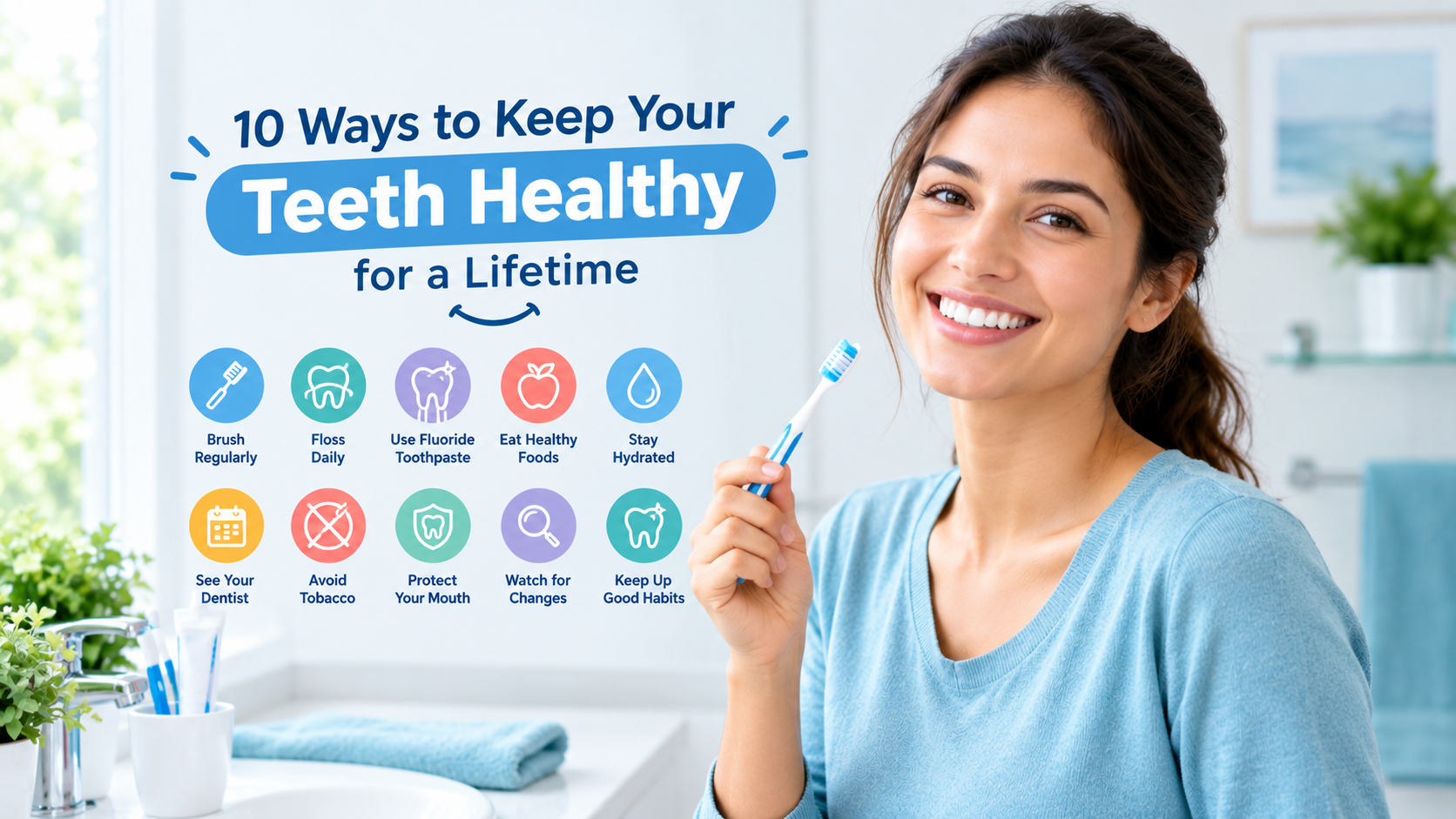
10 Ways to Keep Your Teeth Healthy for a Lifetime
Healthy teeth do more than give you a confident smile. They help you chew food comfortably, speak clearly, and maintain good oral health as you age. The good news is that a few simple daily habits can help protect your teeth and gums from common problems such as cavities, plaque buildup, and gum disease.
If you are looking for 10 ways to keep your teeth healthy, start with consistent oral hygiene, a balanced diet, and regular dental visits. These practical habits can make a difference whether you are maintaining your natural teeth or trying to improve your current dental care routine.
10 Best Foods That Are Good for Teeth for a Healthy Smile
Why Is It Important to Keep Your Teeth Healthy?
Your teeth are exposed to food particles, bacteria, and acids throughout the day. Dental plaque, a sticky film containing bacteria, can accumulate on tooth surfaces and contribute to tooth decay and gum disease when it is not removed regularly.
Good oral hygiene helps control plaque, protect tooth enamel, and support healthy gums. It can also help you recognize potential dental problems before they become more serious.
According to the National Institute of Dental and Craniofacial Research (NIDCR), brushing, cleaning between your teeth, and visiting your dentist are important parts of maintaining oral health.
10 Ways to Keep Your Teeth Healthy
1. Brush Your Teeth Twice a Day
Brushing is one of the most important habits for maintaining healthy teeth. It removes plaque, food debris, and bacteria from tooth surfaces before they can contribute to dental problems.
Brush your teeth twice a day for two minutes each time, including once before bedtime. Use a soft-bristled toothbrush and gentle, short strokes. Make sure you clean the front, back, and chewing surfaces of every tooth.
Avoid brushing too aggressively. Applying excessive pressure can irritate your gums and contribute to wear around the gumline.
Helpful tip: Set a two-minute timer or use an electric toothbrush with a built-in timer to help you brush for the recommended amount of time.
2. Use Fluoride Toothpaste
Fluoride helps strengthen tooth enamel and makes teeth more resistant to acid attacks that can cause cavities. That is why choosing an appropriate fluoride toothpaste is an important part of everyday dental care.
When shopping for toothpaste, look for fluoride on the ingredient label. In the United States, you can also look for the American Dental Association (ADA) Seal of Acceptance on eligible products.
Use toothpaste according to its directions. Children need age-appropriate amounts and supervision to help prevent swallowing toothpaste.
Fluoride toothpaste does not replace brushing technique or regular dental visits, but it provides an important layer of protection against tooth decay.
3. Clean Between Your Teeth Every Day
A toothbrush cannot reach every surface between your teeth. Food debris and plaque can collect in these narrow spaces and along the gumline, increasing the risk of cavities and gum inflammation.
Clean between your teeth once a day using dental floss or another suitable interdental cleaner. If traditional floss is difficult to use, consider floss holders, interdental brushes, or a water flosser.
Move floss gently between your teeth rather than snapping it against your gums. Curve it around each tooth and carefully clean along the sides near the gumline.
Choose a tool that works comfortably for you, and ask your dentist which option best fits your dental needs.
4. Limit Sugary Foods and Drinks
Sugary foods and beverages can contribute to tooth decay. Bacteria in dental plaque use sugars to produce acids that attack tooth enamel.
You do not necessarily have to eliminate every sweet food, but reducing how often you consume sugary snacks and drinks can support better oral health.
Consider these practical changes:
- Choose water instead of soda or other sugary drinks.
- Eat sweets with a meal rather than snacking on them frequently throughout the day.
- Limit sticky candies that remain on your teeth.
- Check food labels for added sugars.
- Choose nutritious snacks such as plain yogurt, vegetables, or cheese when appropriate for your dietary needs.
Remember that frequent exposure to sugar matters. Small, repeated sugary snacks throughout the day can make it harder to protect your teeth.
5. Drink Plenty of Water
Water helps keep your mouth hydrated and can wash away some food particles after eating. Drinking water instead of sugary beverages also reduces your exposure to added sugar.
When available and appropriate for your household, fluoridated tap water provides an additional benefit because fluoride helps protect against cavities.
If you primarily drink bottled water, remember that its fluoride content varies. You can check with your local water utility to learn about your community’s water supply.
Water is particularly useful after meals when brushing is not immediately possible. However, drinking water does not replace brushing twice daily or cleaning between your teeth.
6. Eat a Balanced Diet for Healthy Teeth and Gums
Your diet supports the health of your teeth, gums, and the rest of your body. A varied eating pattern that includes vegetables, fruits, whole grains, protein sources, and calcium-rich foods can help provide nutrients needed for normal oral health.
Some useful choices include:
- Milk, plain yogurt, and cheese: Provide calcium and other nutrients that support teeth and bones.
- Leafy green vegetables: Supply vitamins and minerals as part of a balanced diet.
- Crunchy vegetables: Such as carrots and celery, offer nutritious alternatives to sugary snacks.
- Whole fruits: Provide fiber and nutrients; whole fruit is generally preferable to frequent sugary fruit drinks.
- Nuts and seeds: Can provide minerals and other nutrients, provided they are safe for your individual dental needs.
No single food can prevent every dental problem. Focus on your overall diet, limit added sugars, and follow your dentist’s advice if you have sensitive teeth, braces, or other dietary considerations.
7. Replace Your Toothbrush Regularly
A toothbrush with worn or frayed bristles may not clean as effectively as one in good condition. Keeping your toothbrush clean and replacing it when necessary helps maintain a consistent oral hygiene routine.
The ADA recommends replacing a toothbrush approximately every three to four months, or sooner if its bristles become frayed.
After brushing, rinse the toothbrush thoroughly and store it upright so it can air-dry. Avoid routinely storing a wet toothbrush in a closed container, as a moist environment can encourage microbial growth.
You do not need an expensive toothbrush to maintain good oral health. A suitable soft-bristled manual toothbrush can work well when used correctly.
8. Visit Your Dentist Regularly
Professional dental care is an essential part of keeping your teeth healthy. Even if your teeth feel fine, a dentist can identify early signs of cavities, gum disease, and other oral health problems that may not be obvious at home.
Dental visits may include an examination, professional cleaning, and recommendations based on your individual risk factors.
How often you need an appointment depends on your oral health. The CDC advises adults to visit a dentist at least once a year, while some people need more frequent care. Your dentist can recommend a schedule based on your history, medications, gum health, and risk of tooth decay.
If cost or insurance coverage is a concern, ask about payment options, community health centers, dental schools, or other local dental resources.
Do not wait for a routine appointment if you develop persistent tooth pain, swelling, or other concerning symptoms.
9. Avoid Tobacco and Protect Your Mouth
Tobacco use can harm your oral health and increase the risk of gum disease and oral cancer. Avoiding tobacco products is an important step toward protecting your mouth and overall health.
If you smoke or use other tobacco products, consider seeking support from a healthcare professional to help you quit.
It is also important to protect your teeth from physical injuries. Wear a properly fitted mouthguard when participating in contact sports or activities with a risk of dental injury.
If you grind or clench your teeth, especially during sleep, ask your dentist whether a custom-fitted night guard may be appropriate.
These preventive steps help address risks that brushing and flossing alone cannot eliminate.
10. Pay Attention to Changes in Your Teeth and Gums
Regularly noticing how your mouth feels can help you recognize when something needs professional attention.
Look out for symptoms such as:
- Gums that bleed repeatedly when brushing or flossing.
- Persistent tooth sensitivity to hot, cold, or sweet foods.
- Tooth pain or pain when chewing.
- Swelling around the gums or jaw.
- Persistent bad breath despite good oral hygiene.
- Loose teeth or changes in how your teeth fit together.
These symptoms do not always mean you have a serious condition, but they should not be ignored. Arrange a dental evaluation when they persist or worsen.
Seek urgent dental care for significant swelling, severe pain, or signs of infection. If swelling affects your breathing or swallowing, seek emergency medical care.
A healthy mouth is not simply about having white teeth. Healthy gums, comfortable chewing, and the absence of untreated dental disease matter just as much.
A Simple Daily Dental Care Routine
Following a consistent schedule can make oral hygiene easier to maintain.
| Time | What to do |
|---|---|
| Morning | Brush for two minutes with fluoride toothpaste. |
| After meals | Drink water and avoid frequent sugary snacks. |
| Once each day | Clean between your teeth with floss or another suitable tool. |
| Before bed | Brush thoroughly with fluoride toothpaste. |
| Throughout the year | Attend dental visits as recommended by your dentist. |
You can adjust this routine to fit your schedule and dental needs. Consistency is more important than purchasing lots of dental products.
Common Mistakes That Can Harm Your Teeth
Even people who brush every day can overlook habits that affect their oral health.
Brushing too hard: Aggressive brushing can irritate gums. Use a soft-bristled brush and gentle pressure.
Skipping flossing: Brushing alone does not adequately clean every space between the teeth.
Using mouthwash instead of brushing: Mouthwash may be a useful addition for some people, but it does not replace brushing and interdental cleaning.
Frequently sipping sugary drinks: Repeated sugar exposure can increase the risk of tooth decay.
Ignoring bleeding gums: Recurrent bleeding can be a sign of gum inflammation and deserves attention.
Waiting until a tooth hurts: Some dental problems develop before noticeable pain appears. Regular checkups can help identify problems earlier.
Avoid relying on home remedies that promise to whiten or repair teeth without evidence. Harsh abrasives and acidic substances can damage enamel. Consult a dental professional before trying unusual dental treatments.
Frequently Asked Questions
What is the best way to keep your teeth healthy?
Brush twice daily with fluoride toothpaste, clean between your teeth once a day, limit sugary foods and drinks, drink water, eat a balanced diet, and visit your dentist as recommended.
How often should you brush your teeth?
For most people, brushing twice a day for two minutes each time with fluoride toothpaste is recommended. Brush before bedtime and once at another time during the day.
Is flossing really necessary every day?
Daily cleaning between your teeth helps remove plaque and debris that a toothbrush may miss. Dental floss is one option, but interdental brushes and other suitable cleaners may also work.
What foods are good for teeth and gums?
A balanced diet that includes vegetables, whole fruits, whole grains, and calcium-rich foods such as plain yogurt and cheese can support oral health. Limit added sugars and frequent sugary drinks.
Can you keep your teeth healthy as you get older?
Yes. Good daily oral hygiene, regular dental care, a balanced diet, and appropriate management of dry mouth and other risk factors can help protect natural teeth throughout life. Your dental routine may need to change as you age.
When should you see a dentist about tooth pain?
Arrange a dental appointment promptly for persistent pain, sensitivity, swelling, or bleeding gums. Severe pain, facial swelling, fever with suspected dental infection, or worsening symptoms may require urgent assessment. Difficulty breathing or swallowing is an emergency.
Final Thoughts
Learning the 10 ways to keep your teeth healthy is a practical starting point for building better oral hygiene habits. Brush with fluoride toothpaste, clean between your teeth, choose nutritious foods, limit sugar, drink water, and keep up with professional dental care.
You do not need a complicated routine to start protecting your smile. Focus on consistent habits and seek professional advice whenever you notice a change in your teeth or gums.
Medical disclaimer: This article is for general educational purposes and is not a substitute for personalized dental advice, diagnosis, or treatment. Consult a licensed dental professional about your individual oral health needs.
Sources
- Centers for Disease Control and Prevention (CDC). Oral Health Tips for Adults
- National Institute of Dental and Craniofacial Research (NIDCR). Oral Hygiene
- American Dental Association (ADA). Brushing Your Teeth
- American Dental Association (ADA). Dental Floss and Interdental Cleaners
- Centers for Disease Control and Prevention (CDC). About Fluoride
1 thought on “10 Ways to Keep Your Teeth Healthy: Easy Daily Tips”