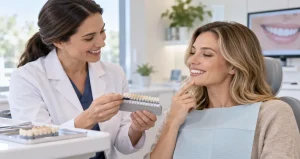
Teeth whitening sounds simple until you compare the choices. Dental offices offer professional bleaching, stores sell strips and whitening toothpastes, and social media is filled with home remedies promising a brighter smile. The important question is not which option looks most impressive in an advertisement. It is which method can improve tooth color predictably without unnecessarily irritating the teeth or gums.
A dentist-centered approach starts with the reason your teeth look darker. Surface stains from coffee, tea, tobacco, and strongly pigmented foods behave differently from discoloration inside the tooth. Cavities, gum problems, exposed roots, old restorations, and a single dark tooth can also change the treatment plan. That is why dentists generally recommend matching the whitening method to the person rather than automatically choosing the strongest available product.
What Dentists Check Before Recommending Teeth Whitening?
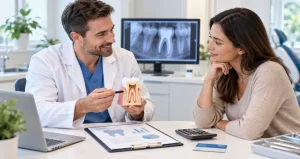
Before professional whitening, a dentist may examine the teeth and gums and review existing sensitivity, fillings, crowns, veneers, implants, decay, and possible causes of discoloration. This step matters because bleaching agents work on natural tooth structure but do not predictably change the color of crowns, veneers, fillings, or implants. Whitening natural teeth around visible restorations can therefore create a noticeable color mismatch.
A dental examination can also identify discoloration that should not simply be covered up with bleaching. For example, one unusually dark tooth may need evaluation for previous trauma, nerve damage, or another dental problem. Treating the cause is more important than making the tooth temporarily appear lighter.
1. Dentist-Supervised Custom Whitening Trays
Custom take-home trays are one of the most practical whitening options for people who want professional supervision without completing the entire treatment in a dental office. The dentist creates trays designed to fit the teeth closely and provides a peroxide-based whitening gel with instructions for how much to use and how long to wear the trays.
The major advantage is control. A properly fitted tray helps keep whitening gel where it belongs and can reduce unnecessary contact with the gums. Treatment happens gradually, which also gives the dentist an opportunity to modify frequency or exposure time if sensitivity develops.
Research comparing professional home whitening with in-office whitening has found that both approaches can produce meaningful color change. A 2024 umbrella review found no significant difference in overall color change between the two methods, while an updated systematic review published in 2025 found broadly similar results on standard shade guides and suggested that sensitivity intensity may sometimes be lower with at-home treatment, although the certainty of that evidence was limited.
2. Professional In-Office Whitening
In-office whitening is often recommended when someone values speed, professional application, and close monitoring. A dental professional protects the gums and other soft tissues before applying a peroxide whitening material. Depending on the system, treatment may involve one appointment or several sessions.
The main benefit is convenience rather than proof that office treatment always produces a better final shade than professionally supervised home whitening. In-office systems can create a noticeable change quickly, making them useful for patients who do not want to manage trays over several days or weeks.
Temporary sensitivity remains possible. Current evidence also suggests that using extremely high peroxide concentrations is not necessarily required for a good result. A 2026 umbrella review found that low-to-medium concentrations used in office protocols can provide whitening results comparable with higher concentrations while reducing sensitivity in some circumstances.
You May Like: Dental Implants Cost In The USA, Explained Simply
Do Laser and Light Whitening Make Teeth Whiter?
Bright lights and lasers can make a whitening procedure appear more advanced, but the light itself should not be confused with the bleaching agent doing most of the chemical work. Multiple systematic reviews have questioned whether routine light activation produces a meaningful improvement in the final whitening result.
A 2026 umbrella review covering previous systematic reviews found no consistent improvement in final whitening effectiveness from laser or light activation compared with nonactivated professional bleaching. In practical terms, patients should evaluate the complete whitening protocol, dental supervision, expected sensitivity, and suitability for their teeth rather than choosing a treatment simply because a light or laser is included.
3. Whitening Strips for Carefully Selected Users
Whitening strips can be a reasonable over-the-counter option for healthy adults with relatively straightforward discoloration. Most bleaching strips use peroxide at concentrations intended for consumer use. They generally work more gradually than professional procedures and require consistent application according to the manufacturer’s directions.
The American Dental Association notes that some whitening strips qualify for the ADA Seal of Acceptance after manufacturers demonstrate that the products meet applicable requirements for safety and effectiveness when used as directed. Even with a reputable product, more is not better. Leaving strips on longer, using them more frequently, or combining several bleaching methods can increase irritation without guaranteeing a better result.
4. Whitening Toothpaste for Surface Stains
Whitening toothpaste has a different role from peroxide bleaching. Many whitening toothpastes primarily remove external stains through polishing or abrasive ingredients rather than substantially changing the internal color of the tooth. They can therefore be useful for stains associated with beverages, food, or other surface deposits.
They are less appropriate when someone expects a dramatic shade change. Think of whitening toothpaste mainly as a surface-stain management option and, in some cases, a way to help maintain results after whitening rather than as a substitute for professional bleaching.
You May Like: Picking The Best Family Dental Insurance In The USA
Options Dentists Are More Cautious About
Home remedies involving acidic fruits, vinegar, aggressive abrasives, or charcoal deserve caution. The problem is that making a surface look temporarily cleaner is not the same as safely bleaching tooth structure. Repeated exposure to acidic or abrasive substances can work against the goal of maintaining healthy enamel.
A systematic review of activated-charcoal toothpastes found that charcoal generally produced less whitening than established alternatives and showed greater abrasive potential in many of the included studies. Evidence for many other popular do-it-yourself methods is also limited. A predictable peroxide-based treatment with appropriate dental guidance has a much stronger evidence base.
How to Choose the Right Whitening Option?
A useful decision framework is to consider four things: the cause of the discoloration, how quickly you want results, your history of tooth sensitivity, and whether you have visible dental restorations. Someone with healthy natural teeth and mild staining may be satisfied with a carefully selected strip. Someone seeking greater control may prefer custom trays. A person wanting rapid professional treatment may choose in-office whitening.
If you already experience significant sensitivity, have cavities or gum disease, notice a single dark tooth, or have several visible crowns or veneers, consultation becomes especially important. Whitening should enhance otherwise appropriate dental care, not replace diagnosis or necessary treatment.
Managing Tooth Sensitivity During Whitening
Temporary tooth sensitivity and gum irritation are among the most commonly reported effects of bleaching. Sensitivity does not automatically mean damage has occurred, but persistent or severe discomfort deserves professional attention. Dentists can sometimes reduce problems by adjusting peroxide concentration, shortening exposure time, changing treatment frequency, or recommending an appropriate desensitizing approach.
People should avoid the temptation to accelerate treatment by adding extra gel or exceeding instructions. Faster exposure is not automatically better, particularly for someone whose teeth are already sensitive.
How Long Do Whitening Results Last?
Whitening is not permanent because teeth continue to encounter pigments and undergo natural age-related changes. Coffee, tea, smoking, strongly colored foods, oral hygiene habits, and individual tooth characteristics influence how long a brighter shade remains noticeable.
Regular brushing, interdental cleaning, professional dental care, and limiting frequent exposure to strong staining agents can help preserve the appearance. Some people eventually use controlled touch-up whitening, preferably according to their dentist’s recommendations rather than continuously bleaching their teeth.
Frequently Asked Questions About Teeth Whitening
1. What teeth whitening method do dentists recommend most?
There is no single best method for everyone. Dentists commonly consider professionally supervised custom trays and in-office peroxide whitening because the treatment can be matched to the patient’s teeth, sensitivity, restorations, and goals. Suitable over-the-counter products may also work for uncomplicated staining.
2. Is professional whitening better than whitening strips?
Professional treatment provides individualized assessment and greater control over application. Whitening strips can still improve color in suitable users, but treatment usually takes longer and the fit cannot be customized around each person’s teeth and gums.
3. Is in-office whitening stronger than take-home whitening?
Office treatments commonly use protocols designed for faster results, but stronger does not necessarily mean a better final outcome. Research indicates that professionally supervised home and office approaches can produce comparable overall whitening in many patients.
4. Does laser teeth whitening work better?
The bleaching gel can work effectively, but current evidence does not show that routine laser or light activation consistently improves the final whitening result compared with appropriate bleaching without light activation.
5. Can whitening damage enamel?
Established peroxide whitening protocols are generally considered appropriate when correctly selected and used as directed. Problems become more likely with misuse, excessive exposure, unsuitable products, or aggressive do-it-yourself techniques. A dentist can identify factors that make whitening inappropriate.
6. Why do my teeth become sensitive after whitening?
Peroxide can temporarily increase tooth sensitivity during the bleaching process. The effect is commonly temporary, but concentration and exposure can influence discomfort. Significant or continuing pain should be discussed with a dentist rather than treated by simply continuing the same whitening schedule.
7. Will whitening change the color of crowns or veneers?
No. Conventional bleaching primarily changes the color of natural teeth and does not reliably whiten crowns, veneers, implants, or tooth-colored restorations. This is important when restorations are visible in the smile because whitening surrounding teeth may create a shade difference.
8. Should I whiten my teeth if I have cavities?
A dental problem should generally be evaluated before cosmetic bleaching. Cavities, unhealthy gums, exposed areas, or unexplained tooth pain can make whitening uncomfortable or inappropriate. Addressing oral health first creates a safer foundation for cosmetic treatment.
9. Is charcoal toothpaste a good whitening option?
Charcoal products are not among the strongest evidence-based choices for bleaching teeth. A systematic review found lower whitening effectiveness than other alternatives and raised concerns about greater abrasive potential. Standard whitening methods have better supporting evidence.
10. Who should talk to a dentist before whitening?
Professional advice is particularly valuable for people with strong sensitivity, gum problems, cavities, extensive restorations, unexplained discoloration, or one unusually dark tooth. Pregnancy or breastfeeding also deserves discussion before elective whitening; NHS guidance advises against whitening during these periods.
Conclusion
The teeth whitening options dentists actually recommend are usually the ones with predictable chemistry, appropriate supervision, and a treatment plan suited to the individual. Professional custom trays and in-office whitening have strong evidence behind them, while carefully selected whitening strips and toothpastes can serve more limited needs.
The smartest first step is understanding why the teeth are discolored and choosing the least aggressive method capable of achieving a realistic result.